

Topo-Lattice Climbing Helmet — Dual-Layer Impact System
Project Type: Personal Development
Role: Design Concept, 3D Modeling
Tools: Gravity Sketch (form & CMF), parametric lattice modeling (Ai Calculation for Structure)
Year: 2025
Materials: Outer: Aluminum shell (gunmetal anodized) · Inner: Silicone resin (Shore A 86–90) · Straps: Orange nylon webbing, acetal hardware
Overview
A lightweight, topology-optimized helmet that combines a thin aluminum outer shell for rigidity/penetration resistance with a gradient silicone lattice for energy absorption. The impact strategy prioritizes the crown (top-of-head) as the primary load case, with an exterior ring/frame to manage off-axis hits while keeping large vent apertures.
Approach
Load mapping: Primary crown impact + secondary side/ring impacts drive lattice density and rib routing.
Topology optimization (outer shell): Minimizes mass while preserving global stiffness; rib “flow lines” follow predicted force paths and create large, self-draining vents.
Gradient lattice (inner): Silicone lattice transitions white → light blue → dark blue (soft → firm) to tune deceleration.
Interface design: Mechanical keying between shell and liner (interlocking tabs + perimeter channel); adhesive bonding with silicone primer.
Fit system: 4-point orange web yoke with rear micro-adjust; generous ear clearance for comfort.
Outcome
A coherent dual-layer system: rigid, penetration-resistant aluminum shell + compliant gradient silicone liner tuned to the dominant impact directions.
Portfolio visuals include front/side, back, interior, and top-down views with color-coded performance gradient and aligned layers.
Next steps: FE simulations (crown/side/edge), prototype in SLM aluminum + printed silicone lattice, fixture drop testing toward EN 12492 / UIAA targets, strap slip/strength verification.
Materials & Construction
Outer Shell (Rigid):
Aluminum alloy, gunmetal anodized; thin shell with integrated ribs (topology-derived).
Manufacturing path: DMLS/SLM metal printing or investment-cast tooling from optimized geometry; tumble + bead-blast + anodize finish.
Inner Lattice (Damping):
Silicone resin, Shore A 86–90, printed as a graded lattice.
Thickness zoning: ~5 mm at the soft white crown core → 10 mm at the darker blue perimeter bands.
Fill area: 22.3% (porosity ~77.7%) to balance airflow, weight, and crush response.
Color = performance cue: white (softest) → light blue → dark blue (stiffer).
Attachment & Finishes:
Overmold/bond liner into shell’s keyed channel using silicone-compatible adhesive (silane-treated).
Orange nylon straps, acetal tri-glides/buckle; replaceable anchor screws.
Ventilation: Open-cell lattice maintains continuous airflow under the shell; rib spacing avoids pressure points.
Spec Snapshot (concept)
Impact priority: Crown first, ring/side second.
Outer shell: Thin aluminum lattice with topology-routed ribs (gunmetal).
Inner liner: Silicone lattice Shore A 86–90, 5–10 mm graded thickness, 22.3% fill area.
Straps: Orange nylon, 4-point, low-profile side guides.
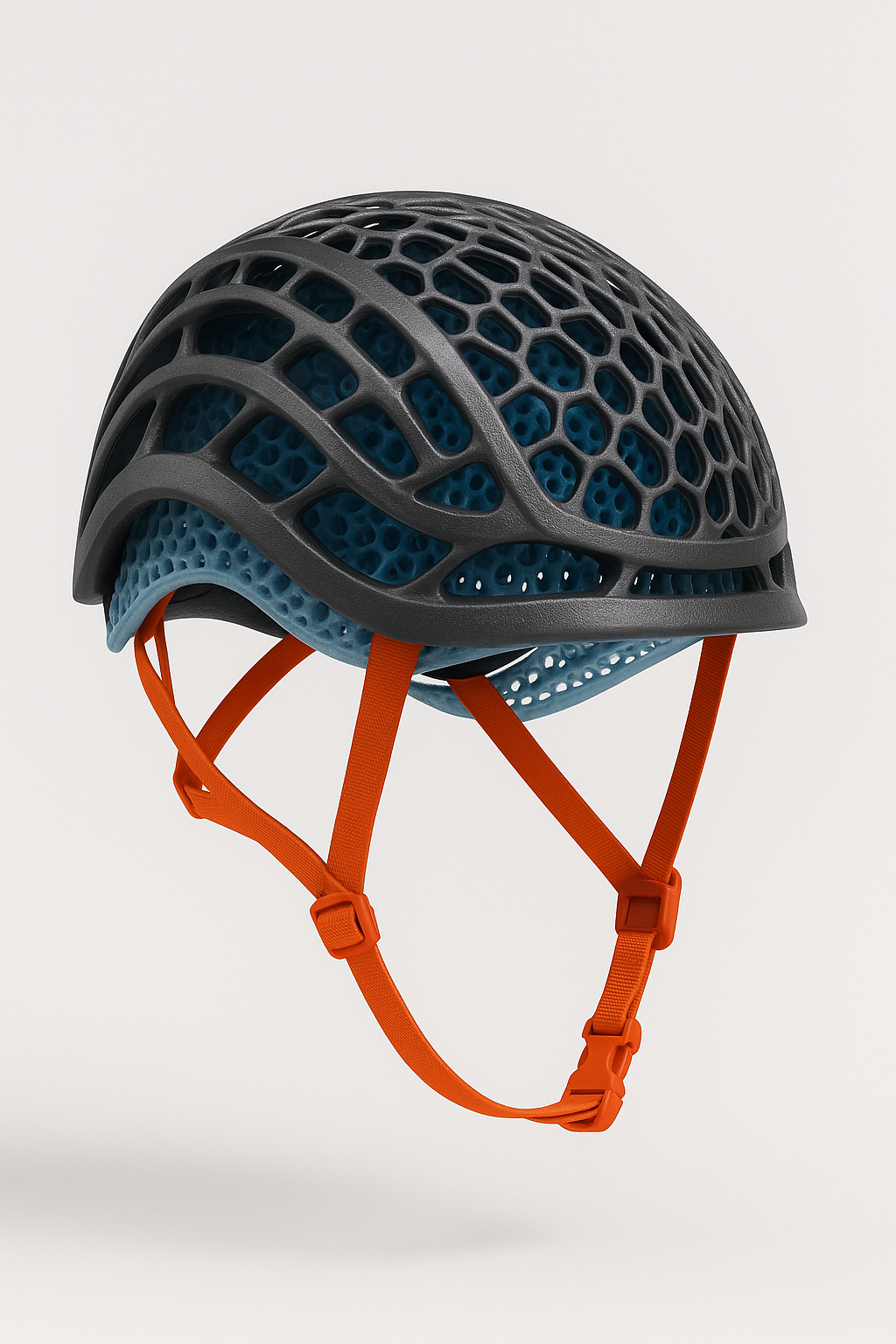
Topo-Lattice Climbing Helmet (Front)
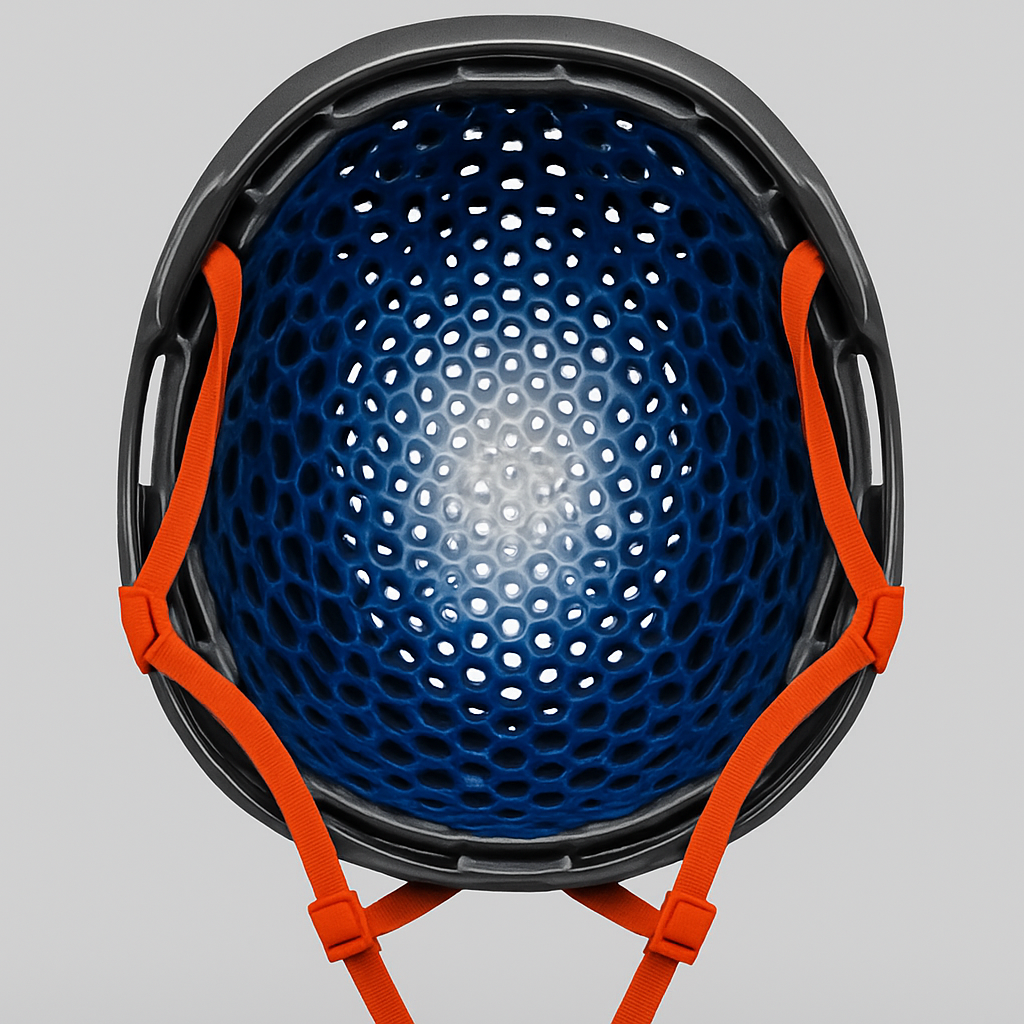
Topo-Lattice Climbing Helmet (Bottom/Inside)
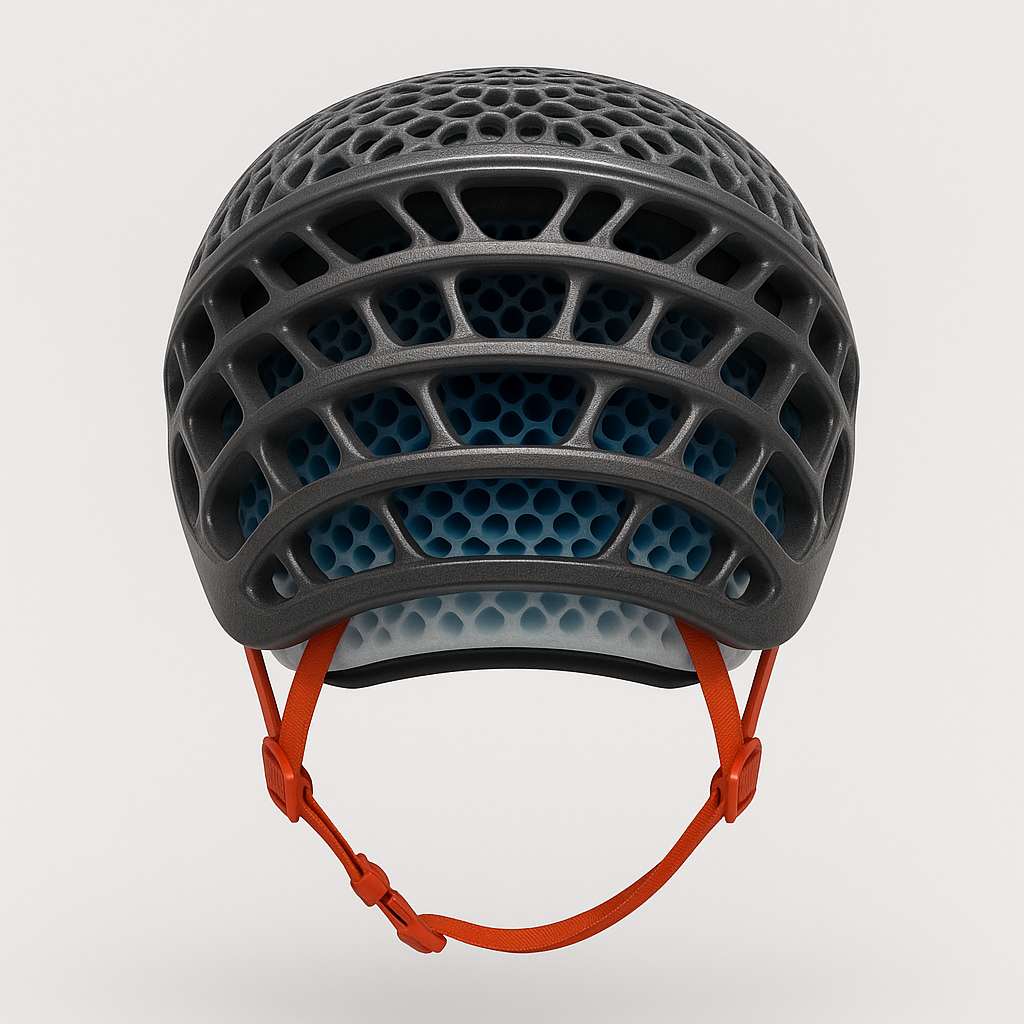
Topo-Lattice Climbing Helmet (Back)
Inspired by my internship at an Additive Manufacturing Campus, where I worked with topology optimization and graded lattices, this helmet applies those methods to a dual-layer aluminum–silicone impact system.
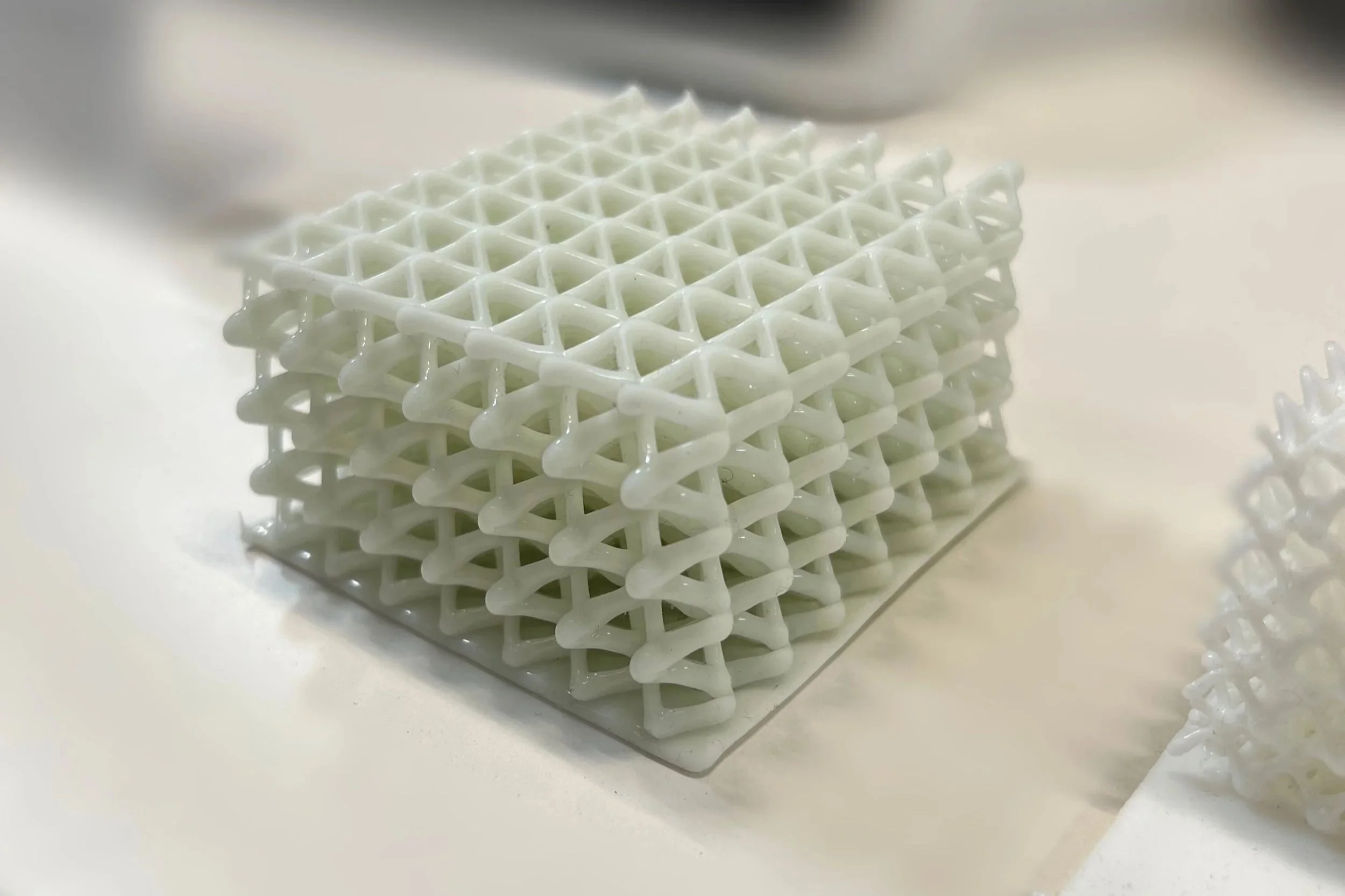
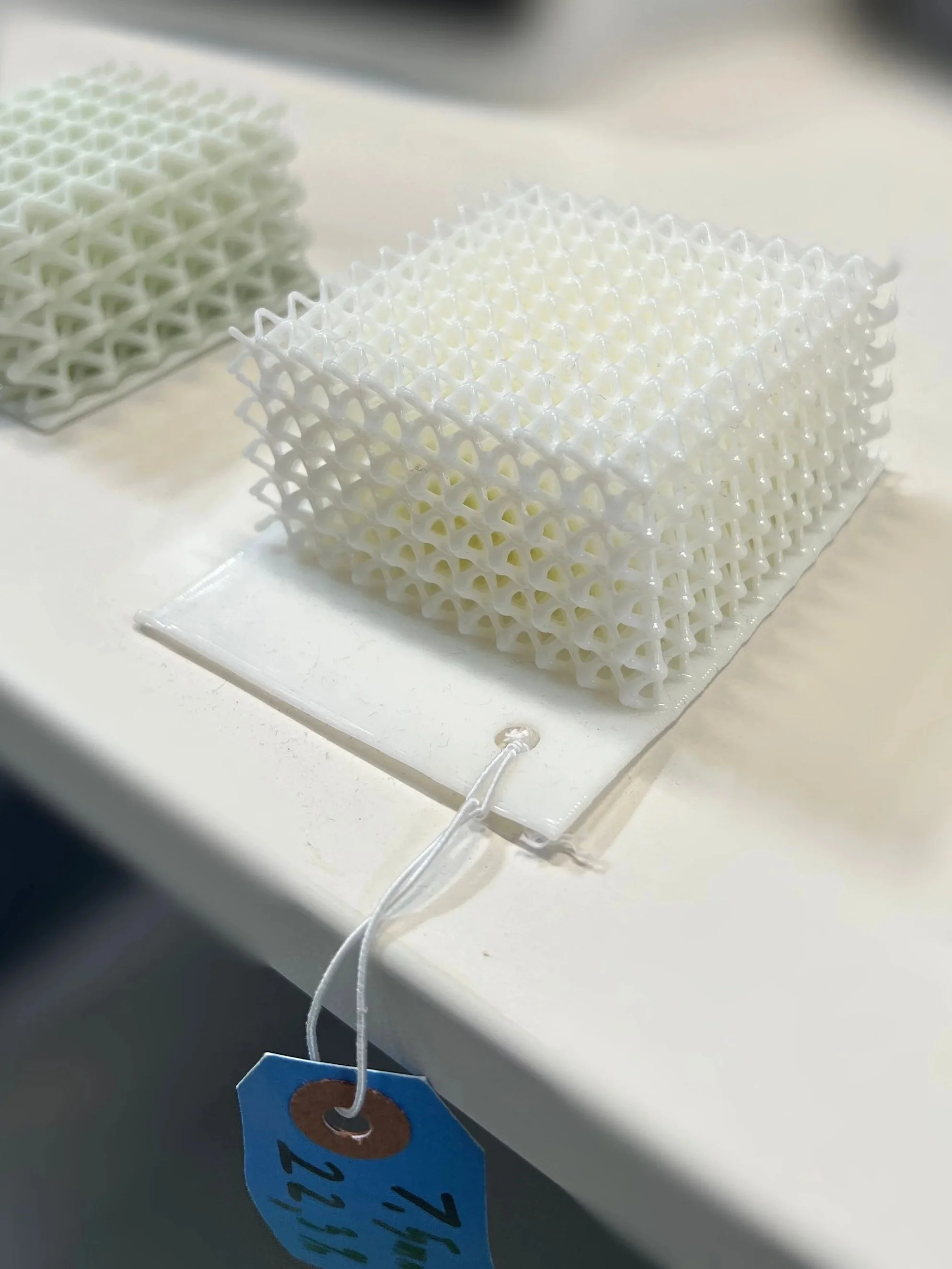
Lattice Structure 10mm
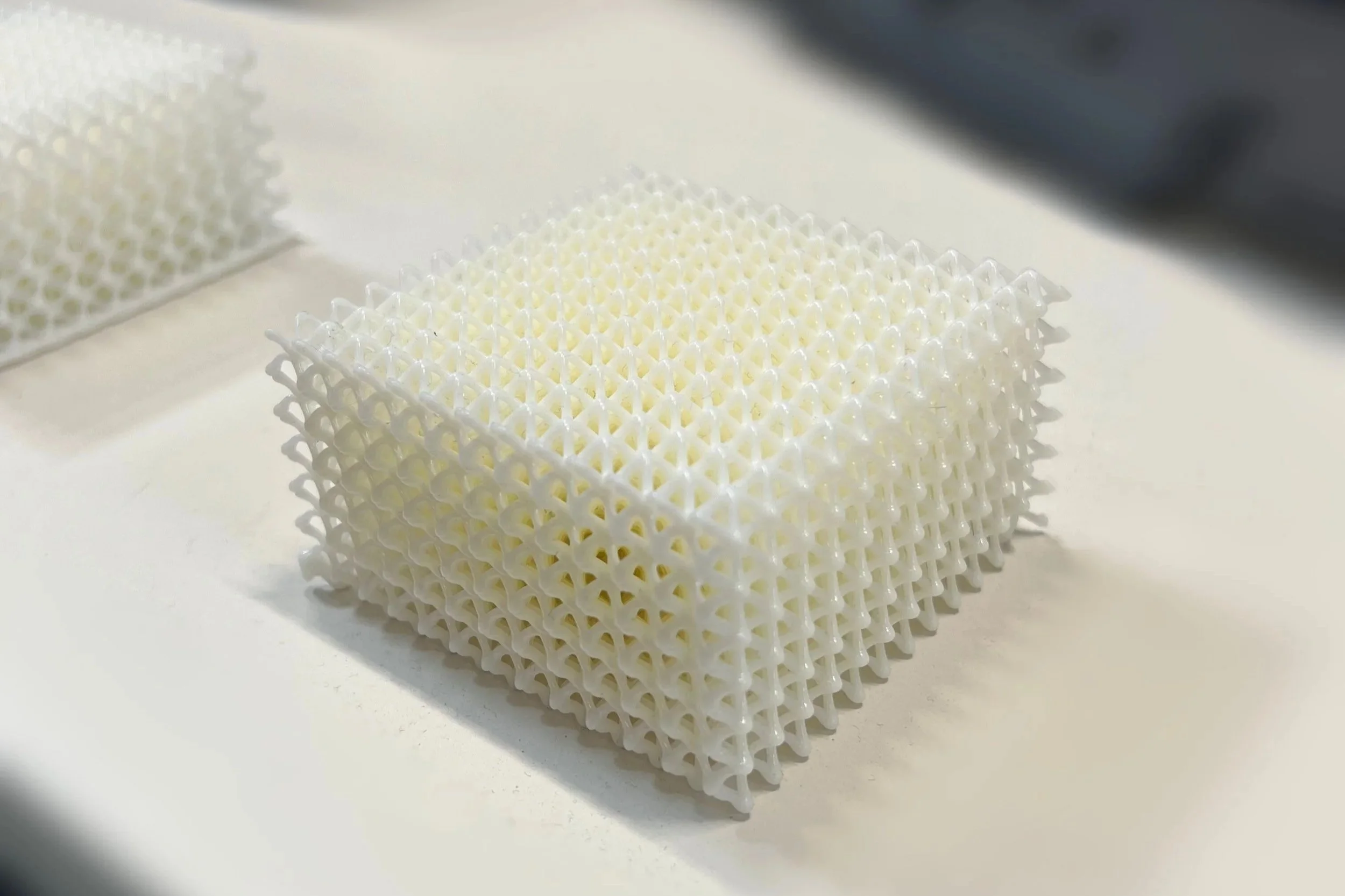
Lattice Structure 7.5mm
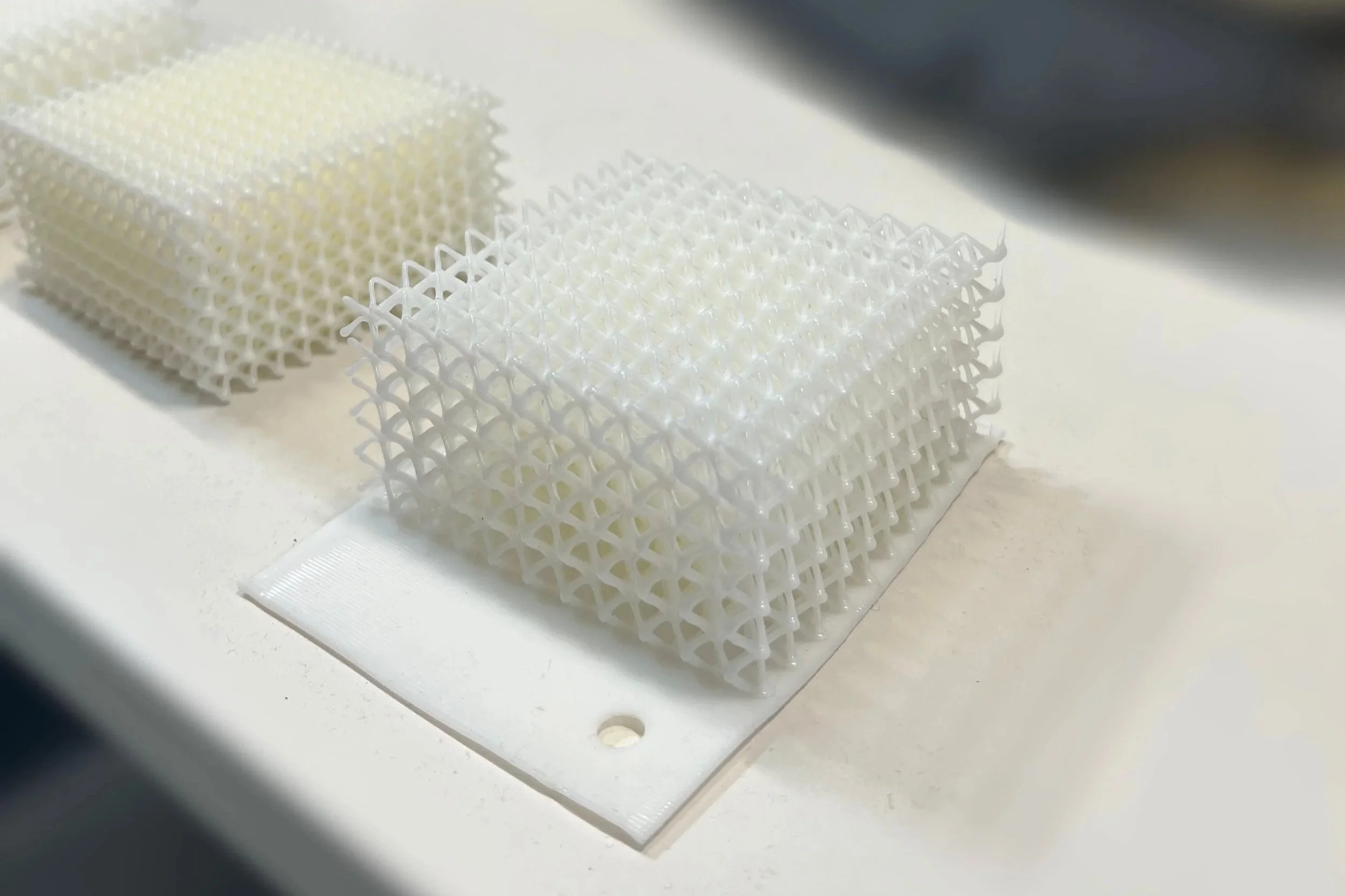
Lattice Structure 5mm
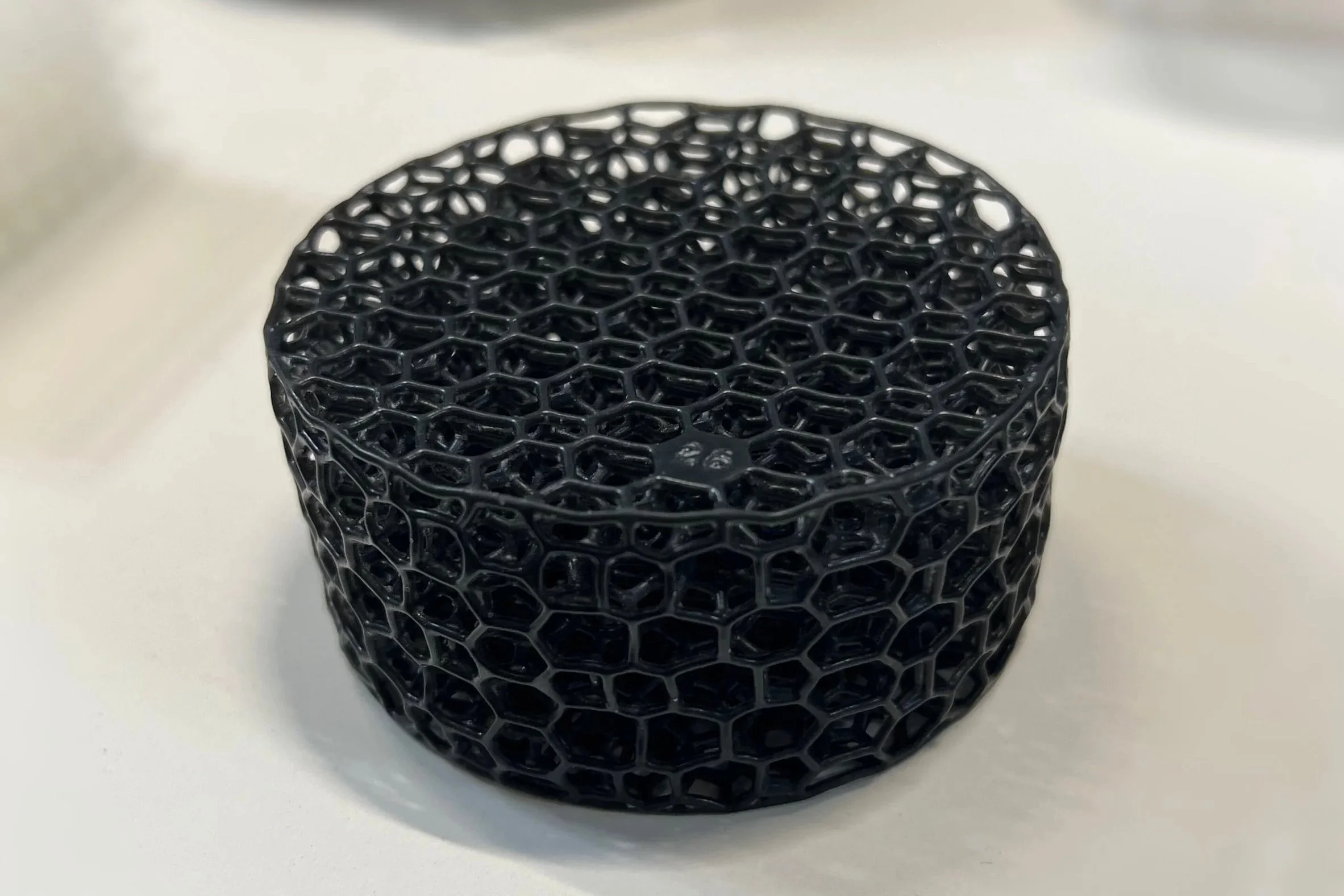
Lattice Structure 3mm
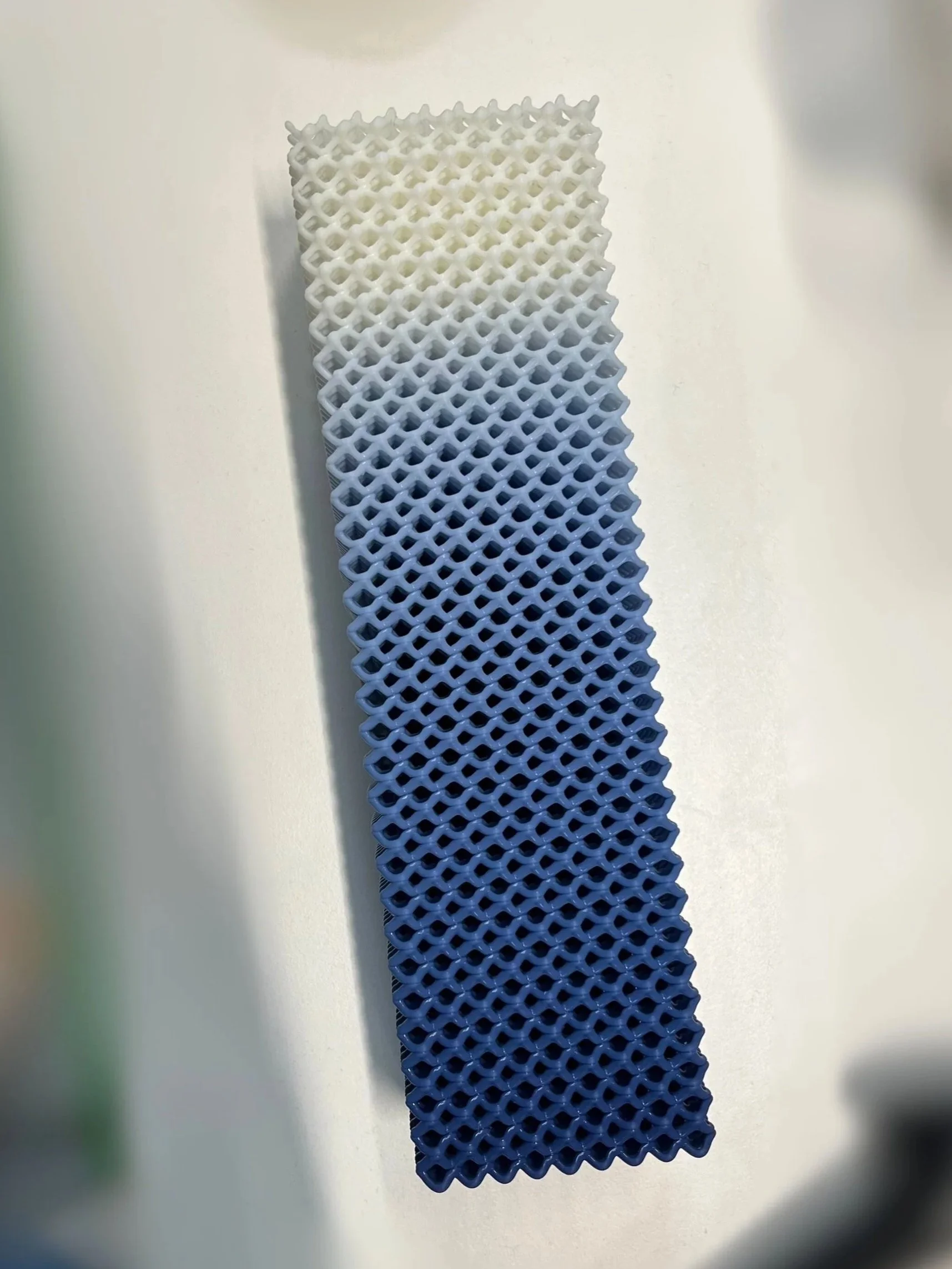
Alternative Lattice Structure
Lattice Structure Stiffness Gradient